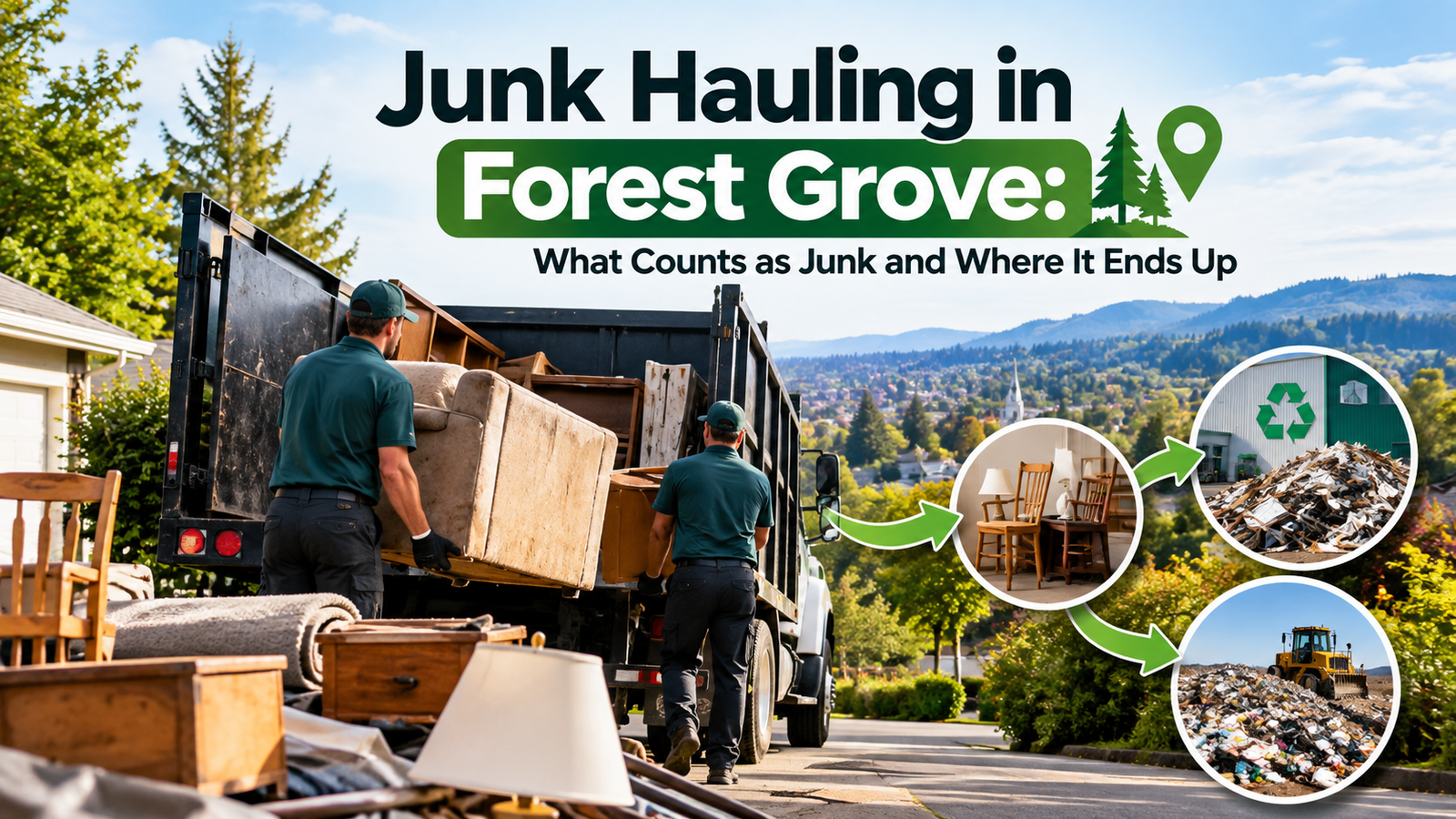
The word junk covers an enormous range of things. A broken recliner, a pile of lumber left from a fence repair, a stack of old tires, a dead dishwasher, a mattress that has seen better decades, and a season’s worth of storm debris are all junk in the everyday sense, yet each one follows a different path once it leaves the property. Junk Hauling Forest Grove is simply the collection and transport of these unwanted items, but behind that simple description sits a set of practical, environmental, and regulatory questions that most people never consider until they have a pile to deal with.
This guide looks at what counts as junk, how hauling is measured and loaded, which items require special handling, where hauled materials actually end up, and how conditions in and around Forest Grove shape the process. It is meant as general information for anyone curious about how unwanted items move from a driveway or garage to their final destination, and why some of them cannot go in an ordinary load at all.
What Counts as Junk
Junk is a practical label rather than a technical one. It generally refers to household or property items that are no longer wanted and are too bulky, too numerous, or too unusual for regular trash collection. Typical examples include:
- Old furniture such as couches, tables, dressers, and bed frames
- Mattresses and box springs
- Appliances like washers, dryers, refrigerators, and stoves
- Electronics, including televisions and computers
- Yard waste and brush too large for the yard debris cart
- Construction and renovation debris such as drywall, lumber, flooring, and fixtures
- Exercise equipment, hot tubs, and playground sets
- Boxes of miscellaneous clutter from garages, basements, and storage areas
- Sheds, fencing, and other small structures that have been taken apart
What separates junk from ordinary garbage is volume and form. A household can fill a trash cart each week, but a couch or a refrigerator does not fit in one, and it is not allowed in the regular stream anyway.
Volume, Weight, and How Loads Are Measured
Two measurements drive almost everything about a haul. The first is volume, usually expressed in cubic yards. A cubic yard is a cube three feet on each side, and a typical pickup truck bed holds about two cubic yards when loosely filled. A full-size junk truck commonly carries somewhere between ten and twenty cubic yards, depending on its body and how high it is loaded.
The second is weight. Different materials weigh very different amounts for the same volume. A cubic yard of old couch cushions weighs little, while a cubic yard of wet soil, roofing shingles, or concrete can weigh hundreds or even thousands of pounds. Trucks and disposal facilities both have weight limits, and heavy materials like masonry, tile, and dirt can reach the limit long before the truck is visually full.
This is why a pile that looks small can be harder to move than a larger, lighter one, and why dense materials are often separated from general junk. At disposal facilities, loads are typically weighed at a scale on the way in, and the weight is recorded and affects how the material is routed and processed at the facility.
Items That Usually Cannot Go in an Ordinary Load
Some items are restricted because they are dangerous, regulated, or require specialized processing. The exact list varies by hauler and disposal site, but the following categories are commonly handled separately.
Hazardous materials. Paints, solvents, pesticides, fuels, pool chemicals, and similar products are not accepted at ordinary disposal sites. They have to go to hazardous waste facilities or collection programs.
Appliances with refrigerants. Refrigerators, freezers, air conditioners, and dehumidifiers contain refrigerant gases that are regulated under federal law. The refrigerant must be recovered by a certified process before the appliance can be scrapped.
Tires. Whole tires are not accepted in most landfills. They are collected through tire recycling channels, where they are shredded and used in products such as rubber surfacing and fuel.
Lithium and other batteries. Batteries can start fires in trucks and at facilities. They are separated and sent to battery recycling programs.
Electronics. Televisions, monitors, and computers go through programs like Oregon’s E-Cycles, which handles them without charge to households.
Mattresses. Oregon has a stewardship program that collects mattresses for recycling into steel, foam, and fabric components.
Medical waste and sharps. These require specialized handling to protect workers.
Asbestos-containing materials. Older building materials, such as some insulation, flooring, and siding, may contain asbestos and are regulated. Suspect materials should be tested and handled under the proper rules.
Propane tanks and compressed gas cylinders. These are a safety hazard in a load and must go through proper channels.
How Loading Works in Practice
Physical access determines how smooth a haul is. A pile at the curb is the easiest. Items inside a house, in a basement, or up a flight of stairs take more time and labor, and they carry more risk of damage to the home itself. Heavy items like hot tubs, pianos, and safes need extra equipment and planning.
Several practical factors come up repeatedly.
- Pathway width. Doorways, hallways, and turns limit what can be carried out without disassembly.
- Stairs. Moving heavy objects up or down stairs raises the risk of injury and damage.
- Driveway and truck access. A truck needs room to park and maneuver, and low branches, tight turns, or soft ground can limit access.
- Surface protection. Floors, walls, and landscaping can be scuffed or damaged, and protection is part of careful work.
- Disassembly. Large furniture, sheds, and structures may need to be taken apart before they can be loaded.
On rural properties around Forest Grove, access can involve gravel driveways, long lanes, or soft ground in the wet season. A heavy truck can sink in saturated soil, which is why dry weather makes outdoor hauling easier.
Where Hauled Junk Actually Goes
Many people assume that hauled junk goes straight to a landfill. In reality, a good portion can be diverted along the way.
Donation and reuse. Furniture, appliances, tools, and household goods that still work are often taken to charitable organizations and thrift stores. Reuse is the best outcome because it extends the life of an item and keeps it out of the waste stream.
Scrap metal recycling. Appliances, metal furniture, fencing, and other metal items are sold to scrap yards, where they are shredded and melted down. Metal is one of the most recyclable materials, and demand for it keeps this stream strong.
Specialty recycling. Electronics, mattresses, tires, paint, and batteries each go to their own recycling programs.
Construction and demolition recycling. Clean wood, drywall, concrete, and similar materials can be taken to facilities that sort and process them. Wood may be chipped for landscaping or fuel, concrete crushed for road base, and drywall processed into soil amendments.
Yard debris composting. Brush, branches, and other plant material go to composting facilities, where they are turned into soil products.
Transfer station and landfill. What cannot be reused or recycled goes to a transfer station, where it is consolidated and shipped to a landfill for engineered burial.
The share of a load that can be diverted varies widely depending on its contents. A load of usable furniture and scrap metal may divert most of its material, while a load of mixed, damaged debris may divert very little.
Why Sorting Matters
Sorting is what makes diversion possible. A mixed pile of everything goes to the landfill by default because separating it later is difficult and sometimes unsafe. A sorted pile, with metal in one place, wood in another, and electronics apart, allows each material to find its best destination.
Sorting also protects people. Batteries tucked inside electronics, chemicals hidden in boxes, and sharp objects buried in debris all create risks for workers. Identifying them in advance prevents injuries and fires.
The Problem of Illegal Dumping
Illegal dumping is the disposal of waste in unauthorized places, such as roadsides, forests, fields, and vacant lots. It is a persistent problem in many communities, including rural parts of Oregon, where isolated roads and wooded areas make it tempting. The consequences are real. Dumped materials can leach chemicals into soil and water, harm wildlife, create fire hazards, and attract further dumping. Cleanup falls on property owners and public agencies.
Oregon law treats unlawful dumping as an offense with fines, and it can carry greater penalties when hazardous materials are involved. Using legitimate disposal channels for even small amounts of waste avoids these problems and protects the surrounding landscape, which is a particular concern near the farmland, creeks, and forested hills around Forest Grove.
Local Conditions That Shape Hauling in Forest Grove
Wet weather. Rain adds weight to materials like cardboard, upholstered furniture, and yard debris, and it can ruin items that would otherwise be donated. Furniture left outside in the wet season often becomes unusable within days.
Storm debris. Windstorms and winter storms drop branches and sometimes whole trees. Downed limbs, damaged fencing, and storm-damaged structures are common sources of hauling needs after severe weather.
Seasonal rhythms. Spring cleaning, summer renovations, and fall yard cleanup all create seasonal peaks in the volume of material that needs to be moved.
Mixed property types. The area includes in-town homes, rural acreage, farms, and rental properties. Each produces different kinds of debris, from household clutter to agricultural leftovers like old fencing, pallets, and equipment.
Student and rental turnover. The end of the school year and lease cycles bring surges of furniture, appliances, and household goods in a college town.
Safety and Property Protection
Hauling combines heavy lifting with unpredictable materials, and a few safety practices are consistently important.
- Lifting with the legs and sharing the load on heavy items
- Wearing gloves and closed-toe shoes to protect against sharp edges and splinters
- Checking for nails, screws, and broken glass in lumber and debris
- Securing loads so nothing falls on the road
- Protecting floors, door frames, and landscaping during removal
- Emptying appliances and drawers before moving them
- Disconnecting utilities properly from appliances before removal
Securing a load matters for the public as well, since debris falling from vehicles is a hazard on roads and highways.
Common Misunderstandings
“Everything goes to the landfill.” A large share of items can be reused or recycled when they are sorted and handled correctly.
“If it fits in the truck, it can go.” Weight limits, hazardous materials, and restricted items affect what can be loaded.
“Old appliances can just be thrown out.” Refrigerant-containing units require proper recovery, and many appliances are valuable as scrap.
“Leaving items at the curb is fine.” Items left out may violate local rules, get damaged by weather, or be considered illegal dumping.
“Wet furniture can still be donated.” Water-damaged upholstery and mattresses are usually not accepted because of mold and hygiene concerns.
Frequently Asked Questions
What is junk hauling?
It is the collection and transport of unwanted items, such as furniture, appliances, and debris, to appropriate places for reuse, recycling, or disposal.
What items cannot be hauled with regular junk?
Hazardous chemicals, propane tanks, certain batteries, medical waste, and asbestos materials generally require special handling. Items like refrigerators, tires, and electronics also go through dedicated channels.
How is the size of a load measured?
It is typically measured in cubic yards, which represent volume, along with weight. Heavy materials such as concrete and soil can exceed weight limits even in small volumes.
Where does hauled junk end up?
Usable items may be donated, metals go to scrap yards, specialty items go to recycling programs, clean construction materials are processed separately, yard debris is composted, and the rest goes to a landfill through a transfer station.
Can furniture be donated if it is old?
Sometimes. Clean, functional furniture in decent condition is often accepted. Items that are damaged, stained, or water-affected typically are not.
Why are refrigerators handled separately?
They contain refrigerant gases that are regulated and must be recovered before the appliance can be recycled or scrapped.
Is it legal to leave junk on a rural roadside?
No. Dumping waste on public or private land without permission is illegal in Oregon and can lead to fines, as well as environmental harm.
How does weather affect junk hauling in Forest Grove?
Rain adds weight, ruins reusable items, and can make rural access difficult. Dry weather makes outdoor loading and driveway access easier.
Final Thoughts
Junk hauling is a more thoughtful process than it appears from the outside. Every item has a best destination, whether that is a new home, a scrap yard, a recycling program, a compost facility, or a landfill, and getting items to the right place depends on sorting, safe handling, and knowledge of what is restricted.
For readers curious about junk hauling in Forest Grove, the local picture of wet winters, rural access, storm debris, and seasonal turnover adds useful context to the basics. Understanding how loads are measured, which items need special handling, and where materials really end up makes it easier to see why careful hauling matters for safety, for neighbors, and for the environment.